
Future of Web Development: Key Trends Shaping Modern Websites
Introduction
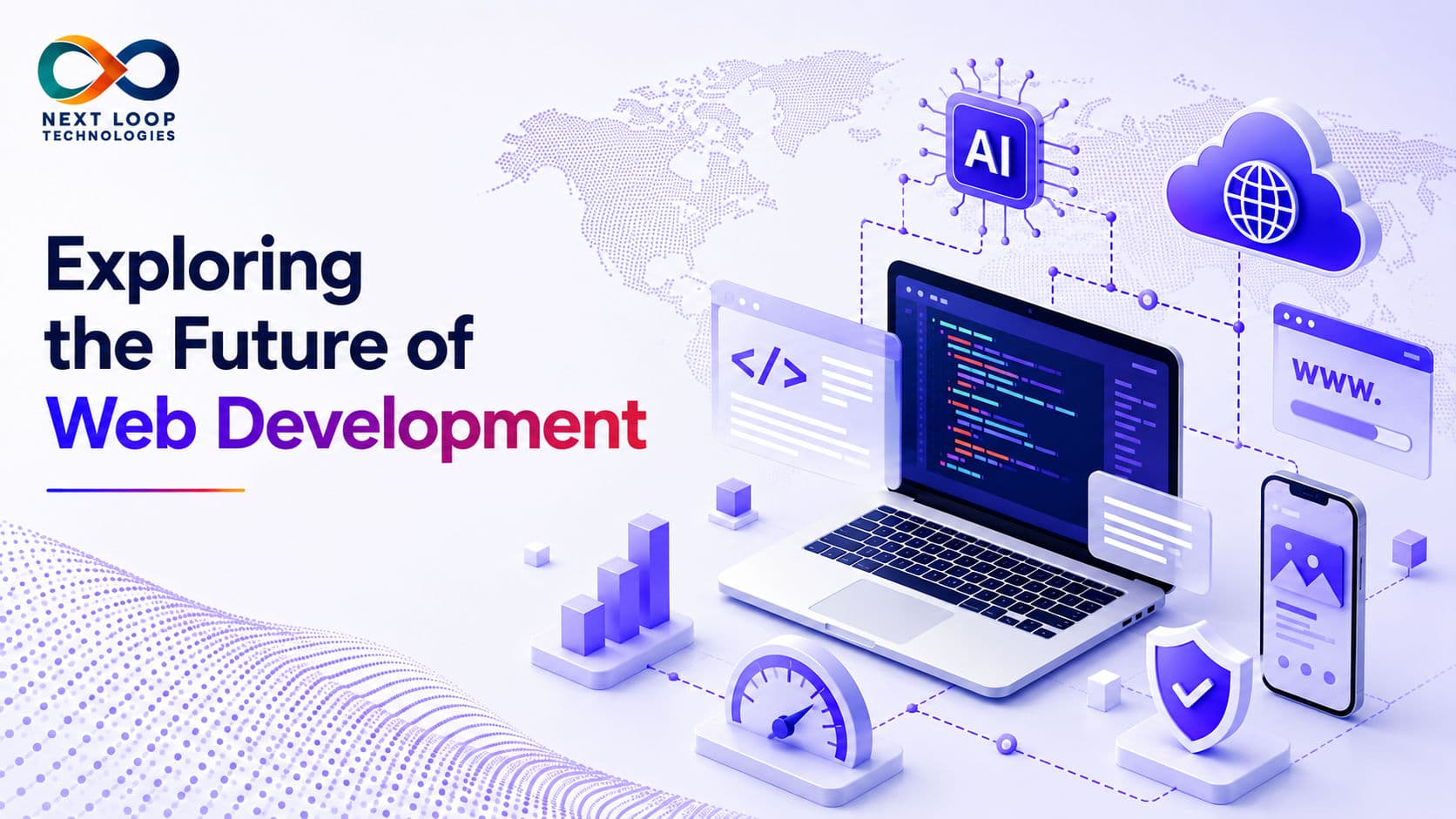
The web development landscape continues to evolve as new technologies change how websites and web applications are designed, built, and maintained. From artificial intelligence and faster browser experiences to accessible design and sustainable coding practices, these developments are creating new opportunities for businesses.
Understanding these trends can help businesses make informed technology decisions, improve user experiences, and build digital products that remain useful as customer expectations change.
1. Artificial Intelligence in Web Development
Artificial intelligence is changing how developers build, test, and improve websites. AI-powered tools can assist with coding, identify potential bugs, and help businesses deliver more personalized digital experiences.
Key applications include:
- AI coding assistants: Help developers write, explain, and review code.
- Automated testing: Identify potential issues and streamline software testing.
- Personalized experiences: Adapt website content and recommendations to relevant user preferences.
- Intelligent chatbots: Help visitors find information and answer common questions.
Although AI can improve development workflows, human review remains essential for code quality, security, and accessibility.
2. WebAssembly: Making Browsers More Powerful
WebAssembly (Wasm) is a technology that allows compatible code to run in web browsers efficiently. It can support demanding applications that involve graphics, simulations, image processing, and complex calculations.
Key advantages include:
- High-performance applications: Run computationally intensive tasks in the browser.
- Advanced browser experiences: Support graphics-intensive tools, games, and interactive applications.
- Broader development options: Allow developers to use languages beyond JavaScript for suitable browser-based tasks.
Actual performance depends on the application, browser, and implementation.
3. Jamstack: Building Faster and More Scalable Websites
Jamstack is a web architecture that commonly uses pre-rendered pages, APIs, and reusable services to deliver website content efficiently. By serving pre-built pages through content delivery networks, developers can improve performance and manage traffic more effectively.
Key benefits include:
- Faster loading: Pre-rendered content can reduce the work required to serve each page.
- Improved security options: Separating the front end from certain backend systems can reduce the exposed attack surface.
- Scalability: Content delivery networks can help websites handle increases in visitor traffic.
- Flexible architecture: APIs allow developers to connect external services as needed.
The best architecture depends on the website's content, functionality, and maintenance requirements.
4. Progressive Web Apps (PWAs)
Progressive Web Apps (PWAs) use web technologies to provide app-like experiences through a browser. Depending on browser and device support, they can offer installation, offline functionality, and push notifications.
Important PWA capabilities include:
- Installability: Users may add the application to their device's home screen.
- Offline support: Cached content and service workers can support selected features without an internet connection.
- Engagement features: Supported devices and browsers can receive web push notifications.
- Responsive experiences: PWAs can adapt to different screen sizes and devices.
PWAs can be useful for businesses that want to improve mobile web experiences without maintaining separate native applications for every platform.
5. Low-Code Development
Low-code development uses visual interfaces, reusable components, and pre-built functionality to reduce the amount of code needed to build applications.
It can help businesses and development teams:
- Build prototypes faster: Test concepts before committing to larger projects.
- Reduce repetitive development work: Reuse components for common features.
- Support collaboration: Allow technical and non-technical teams to contribute to suitable projects.
- Accelerate delivery: Create internal tools and business applications more efficiently.
Low-code platforms still require careful consideration of customization, security, scalability, and vendor dependency.
6. API-First Development
API-first development prioritizes designing application programming interfaces (APIs) before building the systems that use them. APIs allow different applications and services to exchange information.
This approach can provide several advantages:
- Better integration: Connect websites with payment systems, CRMs, and other services.
- Multi-platform delivery: Share data and functionality across websites, mobile apps, and other channels.
- Independent development: Enable different components to evolve with fewer dependencies.
- Easier maintenance: Well-designed APIs create clear contracts between systems.
Strong API documentation, authentication, and version management are important for reliable implementation.
7. Web Accessibility and Inclusive Design
Web accessibility helps ensure that websites and applications can be used by people with different abilities, including those who rely on assistive technologies.
Important practices include:
- Keyboard navigation: Ensure interactive elements can be accessed without a mouse.
- Screen reader compatibility: Use semantic HTML and meaningful labels.
- Readable design: Maintain suitable contrast, typography, and clear page structure.
- Accessible media: Provide alternative text and captions where appropriate.
- Inclusive testing: Evaluate websites with accessibility tools and real user needs in mind.
Accessibility improves usability and can help businesses meet applicable accessibility requirements.
8. Sustainable Web Development
Sustainable web development focuses on reducing unnecessary resource consumption while maintaining useful, reliable digital experiences.
Businesses and developers can support more sustainable websites through:
- Efficient code: Reduce unnecessary processing and scripts.
- Optimized media: Compress images and serve appropriately sized assets.
- Performance improvements: Limit unnecessary network requests and page weight.
- Efficient infrastructure: Choose hosting and delivery options that suit performance and resource requirements.
- Long-term maintainability: Build software that can be updated instead of repeatedly replaced.
These practices can improve performance while helping reduce the resources required to deliver digital services.
9. How Modern Web Development Services Help Businesses Adopt These Trends
Adopting new web technologies requires more than following industry trends. Businesses need to select solutions that fit their objectives, users, existing systems, security requirements, and long-term plans.
Professional web development can help organizations build responsive websites, create interactive web applications, integrate APIs, improve website performance, and deliver consistent experiences across devices.
At Nextloop Technologies, businesses can explore web development services to learn more about developing digital solutions aligned with their business requirements.
Whether a business is planning a new website, modernizing an existing platform, or building a feature-rich web application, a well-planned development process can help balance functionality, performance, accessibility, security, and maintainability.
The right technology choices should be driven by user needs and business goals rather than adopting every emerging trend.
10. How Nextloop Technologies Approaches Modern Web Development
At Nextloop Technologies, modern web development principles can help businesses create digital experiences that support usability, performance, and growth.
Important considerations when planning a web project include:
- Performance: Optimize page speed, images, scripts, and other resources.
- Responsive design: Ensure the website works across desktop, tablet, and mobile devices.
- Accessibility: Make content and interactions usable by a broader audience.
- Maintainability: Use suitable architecture and development practices for long-term improvements.
- Integration: Connect the website with relevant business tools and services.
- Security: Apply appropriate safeguards throughout development and maintenance.
Selecting the right combination of technologies depends on the project's goals, budget, complexity, and expected growth.
Conclusion: Preparing for the Future of Web Development
The future of web development will be shaped by advances in AI, browser performance, modern architecture, app-like web experiences, API integration, accessibility, and sustainability.
Businesses do not need to adopt every new technology to remain competitive. Instead, they should prioritize improvements that solve real user problems, support business objectives, and provide long-term value.
With thoughtful planning and the right technical approach, organizations can build websites and web applications that are useful, secure, accessible, and ready to evolve with changing needs.
Ready to plan your next digital project? Contact Nextloop Technologies to discuss your website and web application development goals.