

Blogs
If you are looking for a complete business solution at in one place in combination with distinctive designs, that is what you can expect from us. To stimulate the growth of your company, we focus on various services, although we do not limit ourselves to this. We keep learning and stay ourselves up to date with current market trends.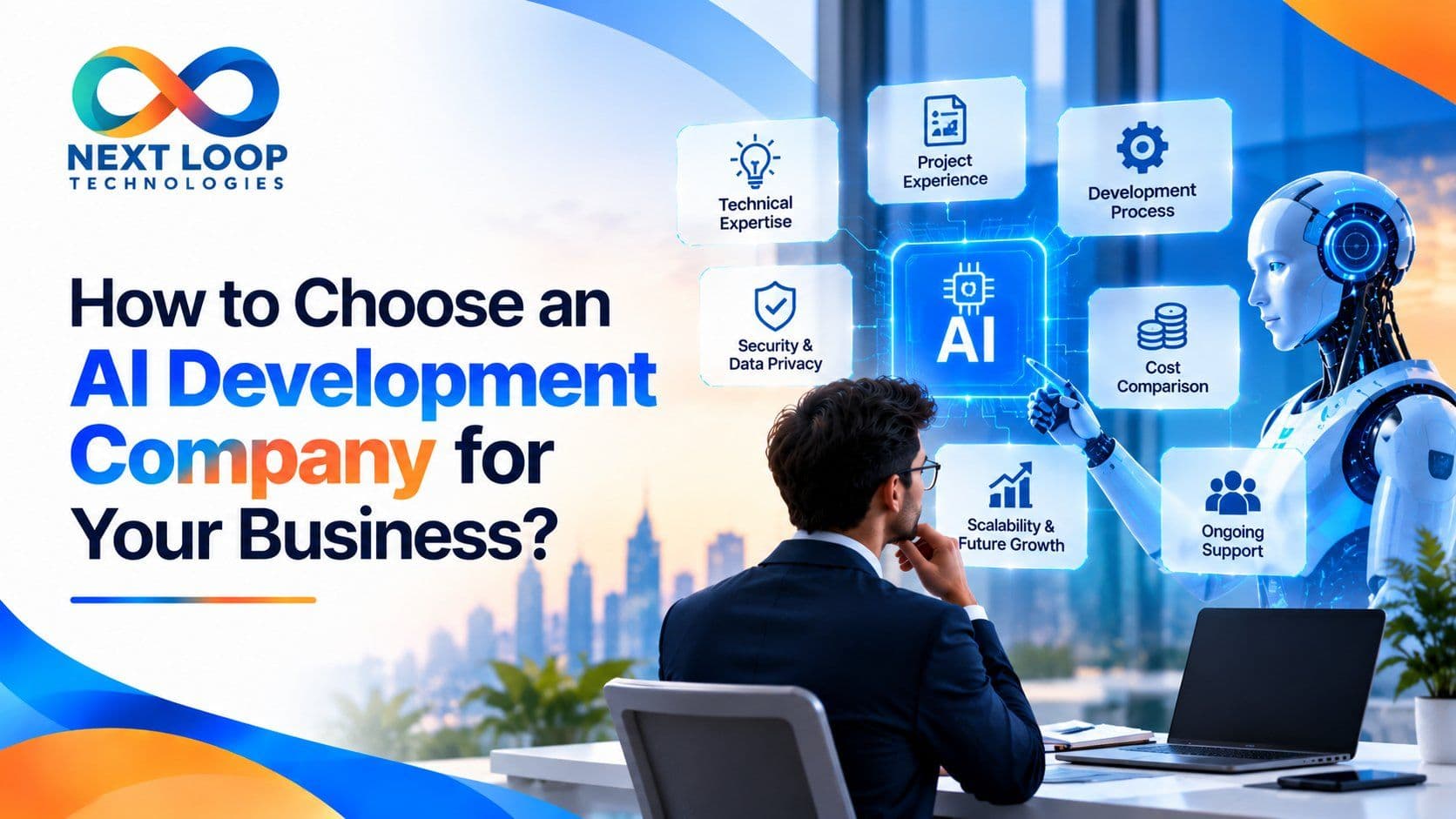
How to Choose an AI Development Company for Your Business?
AI can solve real business problems, but the wrong development partner can turn a promising idea into an expensive project. Choosing the right AI development company means looking beyond technical skills and attractive portfolios. You need a team that understands your goals, handles data carefully, communicates clearly, and can support the solution as your business grows. Here, we will help you evaluate development partners, compare their capabilities, ask the right questions, and make a practical choice based on your project needs, budget, and long-term goals.1. Define What You Want AI to SolveBefore contacting development companies, clearly identify the problem you want AI to address. Start by asking:What takes too much time? Find repetitive tasks that employees handle regularly.Where do delays occur? Look at customer support, reporting, data processing, or internal workflows.What information is difficult to manage? Large datasets may benefit from AI-based analysis.What result do you want? This could mean faster processes, better customer service, improved forecasting, or easier decision-making.A clearly defined problem gives your development partner a strong starting point and helps avoid unnecessary features.2. Match Their Skills With Your RequirementsOnce your goal is clear, check what the team can actually deliver. The right AI development services should fit your business and technical needs. Look for experience in machine learning, generative AI, NLP, computer vision, predictive analytics, automation, data engineering, and AI integrations. A capable AI software development company should also explain its recommendations clearly and show how the technology can support your business.3. Look at Their Previous WorkA company's previous projects can give you useful insight into its capabilities.Instead of simply asking, "Have you built an AI product?" ask for examples that are similar to your project in terms of complexity, users, technology, or business requirements.Pay attention to these details: What to Review Why It Matters Project type Shows relevant experience Technology used Helps confirm technical capability Business challenge Shows problem-solving ability Development process Gives you an idea of how they work Final result Shows what was actually delivered Ongoing support Indicates long-term involvement You do not necessarily need a company that has worked in your exact industry. Relevant technical and problem-solving experience can also be valuable.4. Understand How the Project Will Be BuiltDo not choose a partner based only on the promised final product. Ask how the project will move from an idea to a working solution.A typical process may look like this:Discovery → Planning → Design → Development → Testing → Deployment → SupportEach stage should have a clear purpose.You should know when you will review progress, provide feedback, test features, and approve important decisions.For smaller projects, starting with a focused version can also make sense. MVP development services can help you test an idea with essential features before investing in a larger product.5. Think About What Happens After LaunchLaunching the application is not always the end of an AI project.AI systems may require monitoring, updates, improvements, bug fixes, security changes, or additional training as business needs change.Ask your potential partner:What support is included after launch?Who handles bugs and technical issues?How are system updates managed?Can new features be added later?How will performance be monitored?A team that also provides custom software development services may be useful when your AI product needs to connect with existing business applications or expand into new workflows.6. Make Sure the Solution Can GrowYour business may have 100 users today and significantly more in the future. Your AI application should be planned with reasonable growth in mind.Think about these future requirements:More usersLarger datasetsAdditional featuresNew business locationsThird-party integrationsMobile or web accessIncreased automationAsk the development team how the proposed architecture can handle future changes.You do not need to build every future feature immediately. However, understanding the expansion possibilities can help you avoid major technical limitations later.7. Understand Who Will Work on Your ProjectThe people assigned to your project matter as much as the company itself.Ask who will handle development, project management, testing, design, data engineering, and AI-related work.A project may involve several specialists, including:AI or machine learning developersSoftware developersData engineersUI/UX designersQuality assurance specialistsProject managersIf your internal team needs temporary technical support, IT staff augmentation services can also help add specific skills without making permanent hires.The right team structure will depend on your project's size, timeline, and complexity.8. Check Security Before You SignSecurity should be planned early, especially when your AI system handles business or customer data. Ask how the team will manage authentication, access controls, data protection, API security, testing, storage, and backups. For relevant applications, also discuss AI accuracy, transparency, human review, and potential bias.9. Compare the Cost of the Whole ProjectGetting three quotes can help, but comparing only the final price can be misleading. One company may include testing, deployment, maintenance, and support, while another may charge separately.Compare each proposal based on:Development: What will be built?Timeline: When will milestones be completed?Testing: What is included?Deployment: Who will launch it?Maintenance: What happens after launch?Support: How are issues handled?Future changes: How are new features priced?This gives you a clearer picture of the actual project cost and what each proposal includes.10. Look for Business UnderstandingTechnical knowledge is important, but the team should also understand why you want to build the product.For example, if you want AI to improve customer service, the development team should understand your current support workflow, customer journey, existing tools, and common issues.When reviewing an artificial intelligence development company, ask how its team plans to understand your business before making technical recommendations.A strong discovery process can prevent you from spending money on features that do not solve your actual problem.11. Watch for These Warning SignsSome issues become obvious during the first few conversations.Be cautious when a company:Promises unrealistic resultsCannot explain its development processAvoids questions about securityGives unclear pricingHas no relevant examplesPushes unnecessary featuresCannot explain its technical recommendationsDoes not discuss post-launch supportAn AI solutions development company should be willing to discuss both the possibilities and limitations of your project.Honest expectations are more useful than promises that sound impressive but are difficult to measure.12. Create a Simple Evaluation ChecklistOnce you have shortlisted a few companies, compare them using the same criteria. Evaluation Area Questions to Ask Experience Have they handled similar projects? Technology Do their skills match your requirements? Communication How will you receive project updates? Security How will your data and application be protected? Team Who will actually work on the project? Scalability Can the solution grow with your business? Support What happens after launch? Cost What is included in the estimate? 13. Consider Location, but Focus on FitLocation can matter when choosing a development partner, but it should not be the only factor. Businesses researching an AI development company in India should also consider technical skills, communication, experience, pricing, and support.The key is finding a team that understands your goals, communicates clearly, and can deliver and support the solution effectively. At Nextloop Technologies, the focus is on building practical technology around real business needs.Take the Next Step With the Right Development PartnerChoosing the right AI development company is about more than finding a team that can build AI features. You need a partner that understands your business, communicates clearly, handles data responsibly, and can support the solution as your needs change. Taking time to compare these factors can help you move forward with greater clarity and build an AI solution with a practical role in your business.Key Takeaways:Define the business problem before looking for a developer.Review relevant project experience.Ask how data will be handled and protected.Understand the development process.Check how the team communicates.Discuss scalability before development begins.Confirm who will work on your project.Compare complete project costs.Ask about post-launch support.Look for a partner that understands your business goals.FAQs:1. What should I look for in an AI development company?Look at technical experience, previous projects, communication, data security, team structure, scalability, pricing, and post-launch support. The company should also understand your business problem before recommending a solution.2. How much does AI development cost?The cost depends on the project's complexity, features, data requirements, integrations, development time, and ongoing support. A clear project scope can help you get a more realistic estimate.3. Should I start with a small AI project?Starting small can be useful when you are testing a new idea. A focused first version lets you collect user feedback and identify improvements before expanding the product.4. How do I compare two AI development companies?Use the same criteria for both. Compare their experience, technical skills, development process, communication, security practices, team members, timeline, pricing, and support.5. Can AI be customized for my business?Yes. AI can be built around specific workflows, users, data, integrations, and business goals. Custom AI development services can be considered when existing tools do not provide the functionality you need.
All Blogs
How to Choose an AI Development Company for Your Business?
AI can solve real business problems, but the wrong development partner can turn a promising idea into an expensive project. Choosing the right AI development company means looking beyond technical skills and attractive portfolios. You need a team that understands your goals, handles data carefully, communicates clearly, and can support the solution as your business grows. Here, we will help you evaluate development partners, compare their capabilities, ask the right questions, and make a practical choice based on your project needs, budget, and long-term goals.1. Define What You Want AI to SolveBefore contacting development companies, clearly identify the problem you want AI to address. Start by asking:What takes too much time? Find repetitive tasks that employees handle regularly.Where do delays occur? Look at customer support, reporting, data processing, or internal workflows.What information is difficult to manage? Large datasets may benefit from AI-based analysis.What result do you want? This could mean faster processes, better customer service, improved forecasting, or easier decision-making.A clearly defined problem gives your development partner a strong starting point and helps avoid unnecessary features.2. Match Their Skills With Your RequirementsOnce your goal is clear, check what the team can actually deliver. The right AI development services should fit your business and technical needs. Look for experience in machine learning, generative AI, NLP, computer vision, predictive analytics, automation, data engineering, and AI integrations. A capable AI software development company should also explain its recommendations clearly and show how the technology can support your business.3. Look at Their Previous WorkA company's previous projects can give you useful insight into its capabilities.Instead of simply asking, "Have you built an AI product?" ask for examples that are similar to your project in terms of complexity, users, technology, or business requirements.Pay attention to these details: What to Review Why It Matters Project type Shows relevant experience Technology used Helps confirm technical capability Business challenge Shows problem-solving ability Development process Gives you an idea of how they work Final result Shows what was actually delivered Ongoing support Indicates long-term involvement You do not necessarily need a company that has worked in your exact industry. Relevant technical and problem-solving experience can also be valuable.4. Understand How the Project Will Be BuiltDo not choose a partner based only on the promised final product. Ask how the project will move from an idea to a working solution.A typical process may look like this:Discovery → Planning → Design → Development → Testing → Deployment → SupportEach stage should have a clear purpose.You should know when you will review progress, provide feedback, test features, and approve important decisions.For smaller projects, starting with a focused version can also make sense. MVP development services can help you test an idea with essential features before investing in a larger product.5. Think About What Happens After LaunchLaunching the application is not always the end of an AI project.AI systems may require monitoring, updates, improvements, bug fixes, security changes, or additional training as business needs change.Ask your potential partner:What support is included after launch?Who handles bugs and technical issues?How are system updates managed?Can new features be added later?How will performance be monitored?A team that also provides custom software development services may be useful when your AI product needs to connect with existing business applications or expand into new workflows.6. Make Sure the Solution Can GrowYour business may have 100 users today and significantly more in the future. Your AI application should be planned with reasonable growth in mind.Think about these future requirements:More usersLarger datasetsAdditional featuresNew business locationsThird-party integrationsMobile or web accessIncreased automationAsk the development team how the proposed architecture can handle future changes.You do not need to build every future feature immediately. However, understanding the expansion possibilities can help you avoid major technical limitations later.7. Understand Who Will Work on Your ProjectThe people assigned to your project matter as much as the company itself.Ask who will handle development, project management, testing, design, data engineering, and AI-related work.A project may involve several specialists, including:AI or machine learning developersSoftware developersData engineersUI/UX designersQuality assurance specialistsProject managersIf your internal team needs temporary technical support, IT staff augmentation services can also help add specific skills without making permanent hires.The right team structure will depend on your project's size, timeline, and complexity.8. Check Security Before You SignSecurity should be planned early, especially when your AI system handles business or customer data. Ask how the team will manage authentication, access controls, data protection, API security, testing, storage, and backups. For relevant applications, also discuss AI accuracy, transparency, human review, and potential bias.9. Compare the Cost of the Whole ProjectGetting three quotes can help, but comparing only the final price can be misleading. One company may include testing, deployment, maintenance, and support, while another may charge separately.Compare each proposal based on:Development: What will be built?Timeline: When will milestones be completed?Testing: What is included?Deployment: Who will launch it?Maintenance: What happens after launch?Support: How are issues handled?Future changes: How are new features priced?This gives you a clearer picture of the actual project cost and what each proposal includes.10. Look for Business UnderstandingTechnical knowledge is important, but the team should also understand why you want to build the product.For example, if you want AI to improve customer service, the development team should understand your current support workflow, customer journey, existing tools, and common issues.When reviewing an artificial intelligence development company, ask how its team plans to understand your business before making technical recommendations.A strong discovery process can prevent you from spending money on features that do not solve your actual problem.11. Watch for These Warning SignsSome issues become obvious during the first few conversations.Be cautious when a company:Promises unrealistic resultsCannot explain its development processAvoids questions about securityGives unclear pricingHas no relevant examplesPushes unnecessary featuresCannot explain its technical recommendationsDoes not discuss post-launch supportAn AI solutions development company should be willing to discuss both the possibilities and limitations of your project.Honest expectations are more useful than promises that sound impressive but are difficult to measure.12. Create a Simple Evaluation ChecklistOnce you have shortlisted a few companies, compare them using the same criteria. Evaluation Area Questions to Ask Experience Have they handled similar projects? Technology Do their skills match your requirements? Communication How will you receive project updates? Security How will your data and application be protected? Team Who will actually work on the project? Scalability Can the solution grow with your business? Support What happens after launch? Cost What is included in the estimate? 13. Consider Location, but Focus on FitLocation can matter when choosing a development partner, but it should not be the only factor. Businesses researching an AI development company in India should also consider technical skills, communication, experience, pricing, and support.The key is finding a team that understands your goals, communicates clearly, and can deliver and support the solution effectively. At Nextloop Technologies, the focus is on building practical technology around real business needs.Take the Next Step With the Right Development PartnerChoosing the right AI development company is about more than finding a team that can build AI features. You need a partner that understands your business, communicates clearly, handles data responsibly, and can support the solution as your needs change. Taking time to compare these factors can help you move forward with greater clarity and build an AI solution with a practical role in your business.Key Takeaways:Define the business problem before looking for a developer.Review relevant project experience.Ask how data will be handled and protected.Understand the development process.Check how the team communicates.Discuss scalability before development begins.Confirm who will work on your project.Compare complete project costs.Ask about post-launch support.Look for a partner that understands your business goals.FAQs:1. What should I look for in an AI development company?Look at technical experience, previous projects, communication, data security, team structure, scalability, pricing, and post-launch support. The company should also understand your business problem before recommending a solution.2. How much does AI development cost?The cost depends on the project's complexity, features, data requirements, integrations, development time, and ongoing support. A clear project scope can help you get a more realistic estimate.3. Should I start with a small AI project?Starting small can be useful when you are testing a new idea. A focused first version lets you collect user feedback and identify improvements before expanding the product.4. How do I compare two AI development companies?Use the same criteria for both. Compare their experience, technical skills, development process, communication, security practices, team members, timeline, pricing, and support.5. Can AI be customized for my business?Yes. AI can be built around specific workflows, users, data, integrations, and business goals. Custom AI development services can be considered when existing tools do not provide the functionality you need.
Read More...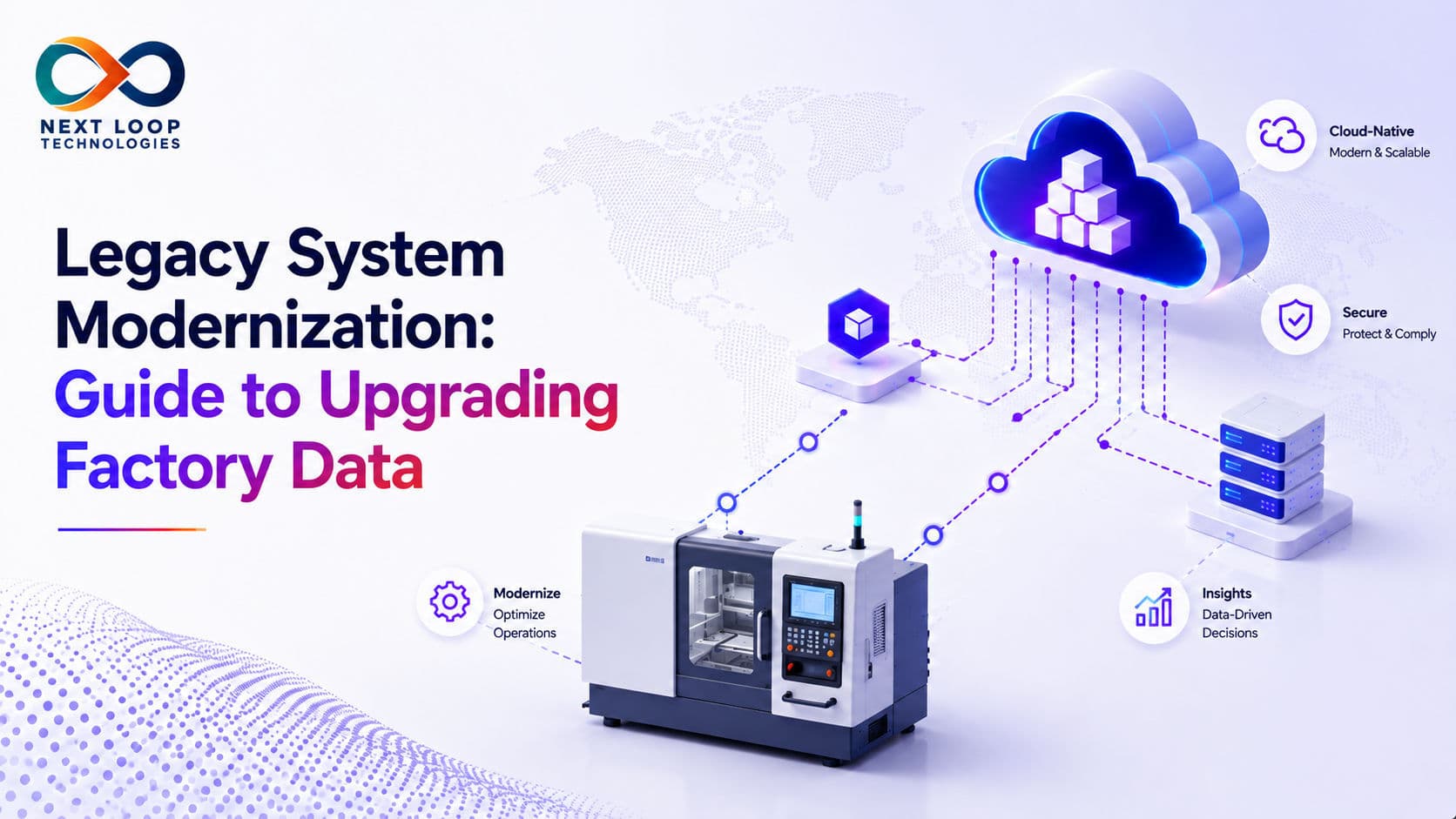
Legacy System Modernization: A Complete Guide to Upgrading Factory Data
Factories and energy plants rely on massive heavy machinery. These industrial pumps, complex assembly lines, and high-pressure compressors were built to last for multiple decades. They are incredibly powerful and they perform their physical duties perfectly day after day.However, they have one major problem that completely frustrates modern executive teams. They were never designed to connect to the modern internet.When these machines were installed years ago, digital cloud servers did not exist. The machinery was built to operate in total isolation. This creates a massive digital blind spot for today's operations directors. When executives cannot see live production numbers, they are forced to make major business choices based on outdated spreadsheets.Upgrading these older machines does not mean you have to throw them away. Legacy system modernization is the highly specialized process of connecting your existing physical equipment to modern web dashboards. You can keep your durable mechanical assets while completely upgrading your digital capabilities. This detailed guide explains exactly how connecting legacy machinery to the cloud works safely efficiently and simply.Read more: Microservices and Distributed Cloud-Native Applications: Evolution, Benefits, and Best PracticesThe Hidden Costs of Aging SystemsWhat Is Legacy System Modernization?Legacy system modernization is the process of connecting existing factory equipment, pumps, compressors, assembly lines, to modern cloud dashboards without replacing the physical machinery itself. It works by attaching sensors and edge devices that extract real-time data from equipment that was never originally built to share it.Many factory directors hesitate to touch their older machinery because it is technically still working. However, waiting until a machine completely fails is a terrible business strategy. The physical machinery essentially traps the critical numbers inside the metal casing.Operations directors face extreme financial risks when they ignore these five common reporting failures:Invisible Metrics: The only way to check machine health is by walking down to the factory floor to read a physical screen mounted directly on the metal casing.Slow Reporting: Executive teams wait days for manual data entry just to see the total weekly production volume.Wasted Labor: Highly skilled engineers spend their valuable time copying numbers onto paper clipboards instead of actually optimizing the machinery.Inventory Panic: Facilities stockpile millions of dollars in spare parts because they never know exactly what will break next.Compliance Penalties: Regulatory bodies require exact emissions and performance data which is impossible to track accurately by hand.Modernizing factory floor data is the only way your business can operate efficiently. When leaders do not know if a machine is failing until it actually starts smoking, the company loses massive amounts of money.What Is IT/OT Convergence?IT/OT convergence is the integration of Information Technology (office systems, cloud servers, corporate networks) with Operational Technology (factory machinery, control systems, safety valves) into a single unified network. It lets executive teams and factory engineers see the same production data at the same time, instead of relying on manually exported spreadsheets. To solve thE massive data problem, we first need to understand the two very different worlds operating inside a standard factory. These two groups rarely speak the same language, which causes massive delays in production reporting.Information Technology IT: This is the team that manages your office computers, your corporate email, and your cloud servers. They work in a world of high-speed internet modern software and instant digital communication.Operational Technology OT: This is the team that manages the physical heavy machinery, the high-pressure safety valves, and the actual factory floor. They work in a world of physical pressure, mechanical vibration, and much older communication protocols.For decades these two teams have used completely different software platforms that could not speak to each other. Bringing these two distinct worlds together into a single unified network is called IT OT convergence.Bridging the gap between software and physical machinery means your executive team and your factory engineers finally look at the exact same numbers at the exact same time.When you unite these two isolated departments, the entire business moves exponentially faster. Executives no longer have to wait for the OT team to manually export a spreadsheet at the end of a shift. This clarity is one of the biggest benefits of it ot convergence because it eliminates hours of wasted daily communication.Building a Proper Legacy System Modernization StrategyYou cannot simply plug a twenty-year-old machine directly into a modern laptop. You need a highly organized engineering plan. Building a proper legacy system modernization strategy allows you to keep your oldest machines while upgrading your digital capabilities completely in a very safe manner.Here are the four critical steps to a successful factory upgrade:Set Clear Executive Goals: Decide exactly what numbers your board actually needs to see. A strong strategy identifies the absolute most critical failure points in the factory and focuses entirely on extracting data from those specific machines first.Audit the Factory Floor: Send engineers to document every single machine its age and its current digital capability. This prevents unexpected surprises during the software installation.Choose Custom SCADA Integration Services: SCADA stands for Supervisory Control and Data Acquisition. Because every factory uses completely different brands of legacy machinery, you cannot buy a generic software package. Partnering with experts who provide custom scada integration services ensures your specific equipment connects safely.Translate the Protocols: Industrial equipment communicates using older rigid languages like Modbus and OPC UA. You must teach your new cloud servers how to understand these older dialects through careful software translation.How to Extract Data from Old Factory EquipmentIf you are wondering how to extract data from old factory equipment, the answer relies entirely on clever digital translation. We introduce a digital translator directly onto the factory floor.Implementing scalable industrial IoT solutions allows you to attach smart digital sensors directly to your oldest mechanical equipment. These digital sensors listen to the mechanical vibrations and temperature changes completely passively. They never interfere with the actual production line or the power supply.Mid Content Infographic Brief for Designer: Create a landscape 16 9 orientation infographic. Use a premium minimal visual style. Show a simple three step flowchart of an old physical machine connecting to a small edge computer which then sends a clean data signal to a modern executive dashboard.What Is Edge Computing in Manufacturing?Edge computing in manufacturing means placing a small industrial computer directly next to a physical machine, so data is processed on-site instead of being sent raw to a distant server. This keeps translation and formatting local, cutting latency and reducing the bandwidth needed to move factory data to the cloud. The real secret to this translation process is edge computing. Instead of sending raw messy data across the internet to a distant server, you place a very small industrial computer directly next to the physical machine.Edge computing manufacturing works incredibly fast because the data stays strictly local. The small computer translates the old machine language instantly packages it neatly and then sends only the clean formatted numbers up to your executive dashboard.A three-step digital translation process showing physical machine data captured by an edge computer and visualized on a modern executive dashboard.Cloud Migration for Legacy Manufacturing ExplainedHistorically factory data was stored on massive physical server racks sitting in a hot dusty closet near the factory floor. This was highly expensive to maintain and very prone to overheating.Cloud migration for legacy manufacturing means moving that storage out of your physical building and into highly secure professional data centers. This massive shift provides three major operational advantages:Global Accessibility: Your executives can log in and check live production numbers from a hotel room across the globe securely.Infinite Storage: You never have to worry about buying new hard drives when your database gets too large.Reduced Overhead: You completely eliminate the expensive electric bill required to cool your own physical server rooms.Keeping Your Factory Safe with OT Security SolutionsThe most common concern about modernization is facility safety. Connecting a physical factory machine to the internet sounds very dangerous to veteran engineers. If a malicious hacker gains access they could potentially shut down your entire production line.This is exactly why proper OT security solutions are absolutely mandatory for any digital upgrade. Protecting your physical equipment requires industrial ot security solutions that block public internet traffic entirely.Here is how modern security architecture keeps your factory completely safe from external threats:One Directional Data Flow: The integration software only allows data to travel up and out to the cloud. It completely blocks any digital signals or commands trying to come back down to the physical machine.Complete Data Scrambling: Every single production number is mathematically scrambled and highly encrypted before it ever leaves the factory floor. Nobody can read it in transit.Hidden Private Networks: Your machine data never touches the public internet. It travels through a completely private hidden digital tunnel directly to your secure corporate servers.Role Based Access: A junior employee cannot view the same data as the chief executive. Strict login rules ensure only authorized leaders can see critical infrastructure metrics.Common Roadblocks in IT OT Convergence and How to Solve ThemUpgrading an entire factory is a complex journey. Leaders who prepare for these common roadblocks experience a much smoother transition.Cultural Resistance: Veteran floor engineers might not trust modern cloud software. You solve this by including them in the planning process early so they see the software as a helpful tool rather than a replacement.Protocol Mismatches: Old machines speak dozens of different proprietary languages. You solve this by using universal edge computing devices that can translate multiple dialects simultaneously.Network Bottlenecks: Older factory wiring cannot handle massive data streams. You solve this by filtering the data locally and only sending the most critical numbers up to the cloud.Evaluating the Financial Return on InvestmentImplementing SCADA integration requires an initial financial investment but the long term savings are astronomical. Modernizing your facility pays for itself through these three massive financial benefits:Reduced Emergency Repairs: Fixing a machine before it breaks is exponentially cheaper than cleaning up after a catastrophic explosion. Predictive analytics save millions in emergency overnight shipping fees.Extended Equipment Life: You do not have to buy a new million dollar compressor. Upgrading the digital sensors adds ten more years of usable life to your existing mechanical assets.Lower Insurance Premiums: Safer factories with better monitoring naturally receive better rates from corporate insurance providers because the risk of a major accident drops dramatically.Improving Data Visibility in ManufacturingThe ultimate goal of this entire process is total executive clarity. Improving data visibility in manufacturing changes everything about how you run your daily operations. You move your entire company from a highly reactive business model to a highly proactive business model.When your executive team can see instant live updates they can spot tiny inefficiencies before they become massive financial disasters. You stop wasting money on emergency helicopter repairs and you stop wasting valuable labor hours on manual data entry. Legacy system modernization is the single most powerful investment an industrial leader can make to secure the future of their facility and maximize their profit margins.
Read More...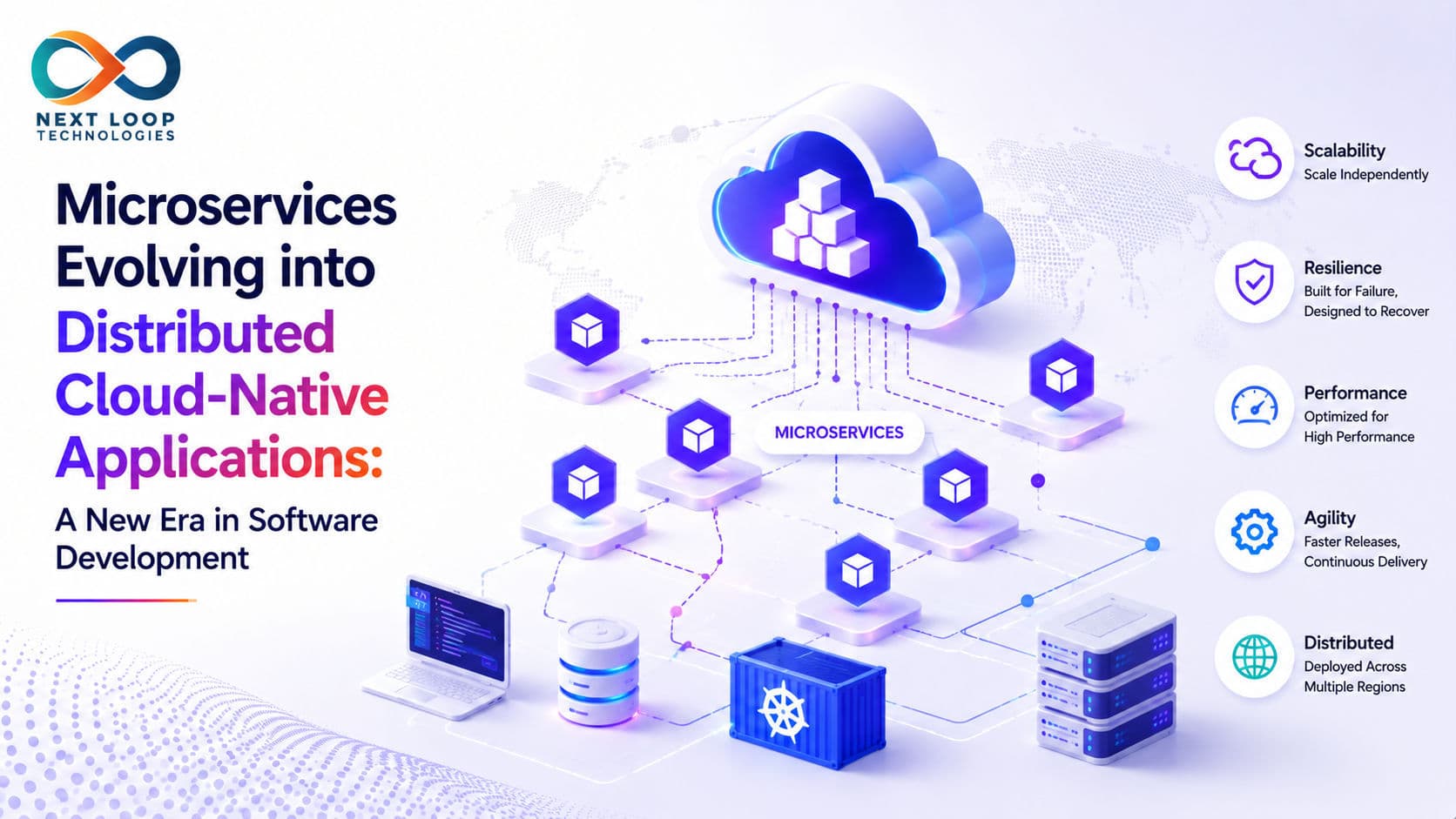
Microservices and Distributed Cloud-Native Applications: Evolution, Benefits, and Best Practices
In today’s fast-paced digital landscape, businesses need software systems that can scale efficiently, remain reliable, and adapt to changing customer expectations. Microservices architecture and cloud-native technologies help organizations build applications that are more flexible and easier to evolve.When combined, these approaches enable businesses to develop, deploy, and manage distributed applications using independent services, cloud infrastructure, and automated delivery processes.In this guide, we’ll explore what microservices and cloud-native applications are, how they work together, their business benefits, and the considerations involved in adopting this architecture.What Are Microservices?Microservices are an architectural approach in which an application is organized into small, independently deployable services. Each service focuses on a specific business capability and communicates with other services through well-defined interfaces, commonly APIs or messaging systems.For example, an e-commerce platform might have separate services for product catalogs, payments, inventory, and order management.Key Characteristics of Microservices ArchitectureIndependent deployment: Teams can update individual services without redeploying the entire application, provided service contracts remain compatible.Business-focused design: Each service handles a specific business capability.Independent scaling: Services can be scaled according to their individual workloads.Technology flexibility: Different services may use different technologies when there is a clear operational benefit.Fault isolation: Failures can be contained when appropriate resilience mechanisms are in place.Microservices can improve flexibility, but they also introduce complexity in communication, monitoring, testing, and operational management.What Are Cloud-Native Applications?Cloud-native applications are designed to take advantage of cloud environments, automation, and modern infrastructure practices. They commonly use technologies such as containers, orchestration platforms, managed cloud services, and serverless computing.Rather than simply moving existing software to a cloud server, cloud-native development focuses on building and operating applications that can take advantage of cloud capabilities.Key Benefits of Cloud-Native Applications1. ScalabilityCloud-native applications can scale resources according to workload demands. With suitable architecture and configuration, businesses can handle traffic spikes without permanently maintaining infrastructure for peak capacity.2. Resilience and ReliabilityHealth checks, automated recovery, redundancy, and distributed deployment can help applications recover from certain failures. Reliability still depends on how the system is designed and operated.3. Faster Software DeliveryAutomated build, testing, and deployment pipelines can help teams release changes more frequently and consistently.4. Infrastructure FlexibilityCloud platforms provide access to different compute, storage, networking, and managed services, allowing businesses to choose infrastructure that fits their requirements.Technologies That Support Cloud-Native DevelopmentCommon technologies and practices include:Containers: Package applications and their dependencies into portable units.Kubernetes: Automate the deployment, scaling, and management of containerized workloads.Serverless computing: Run code or services without directly managing the underlying server infrastructure.CI/CD pipelines: Automate software integration, testing, and delivery.Observability tools: Help teams monitor application health, performance, logs, and distributed requests.The right technology stack depends on the application's complexity, team capabilities, security needs, and operational budget.How Are Microservices Evolving Into Distributed Cloud-Native Applications?Microservices and cloud-native development are complementary approaches. Microservices organize application functionality into services, while cloud-native practices provide ways to deploy, scale, automate, and operate those services across cloud infrastructure.Together, they can support distributed applications that respond more effectively to changing business requirements.1. Independently Scalable ServicesIn a monolithic application, scaling may require allocating more resources to the application as a whole. With microservices, individual services can often scale independently based on demand.For example, an online retailer might need additional capacity for its product catalog during a major sale without scaling every other component by the same amount.2. Autonomous Service DevelopmentTeams can develop and deploy services independently when ownership, interfaces, and dependencies are clearly defined. This can help organizations improve development workflows and reduce coordination overhead.However, splitting services too aggressively can increase network communication and operational complexity. Service boundaries should reflect meaningful business capabilities.3. Distributed ResilienceCloud-native applications can distribute workloads across multiple instances, availability zones, or regions where appropriate. Techniques such as timeouts, retries, circuit breakers, and graceful degradation can help prevent certain failures from spreading across the system.Distribution alone does not guarantee resilience; dependencies and failure scenarios must be planned and tested.4. Automation and Continuous DeliveryContainer platforms and CI/CD pipelines can automate testing, deployment, configuration, and recovery tasks. This helps teams deliver changes consistently while reducing manual operational work.Automated rollbacks, staged releases, and deployment health checks can further reduce release risk.5. Improved Resource UtilizationCloud infrastructure allows businesses to adjust resources according to application needs. Autoscaling and managed services may improve utilization, although cloud costs can rise if workloads, network traffic, storage, and service dependencies are not monitored carefully.6. Distributed Data and CommunicationDistributed cloud-native applications often use APIs, asynchronous messaging, and event-driven communication to connect services. These patterns can improve flexibility but require careful handling of data consistency, message delivery, service failures, and network latency.Why Should Businesses Adopt Distributed Cloud-Native Applications?For businesses with suitable workloads, distributed cloud-native architecture can support faster delivery, improved scalability, and greater flexibility.Faster Time to MarketIndependent service development and automated delivery pipelines can help teams release features without coordinating every change across a single large application.More Responsive User ExperiencesServices can be scaled and optimized according to workload requirements, helping businesses maintain performance during periods of high demand.Greater Flexibility for Business GrowthCloud infrastructure can support expansion into new markets and changing workloads without requiring businesses to manage all infrastructure capacity themselves.Increased InnovationModular systems can allow teams to experiment with new technologies and improve specific business capabilities without rebuilding the entire application.Better Alignment Between Technology and Business NeedsWhen services map to clear business functions, teams can prioritize improvements according to customer needs, operational bottlenecks, and business objectives.These benefits are not automatic. Microservices may be unnecessary for smaller applications or teams that would benefit more from a well-structured monolith.What Challenges Should Businesses Consider?Before adopting a distributed cloud-native architecture, organizations should evaluate several technical and operational challenges.Operational ComplexityManaging multiple services requires effective deployment automation, monitoring, logging, security controls, and incident response processes.Network Latency and Service DependenciesCommunication between services introduces network delays and potential failure points. Teams need clear service contracts, timeouts, and appropriate failure-handling strategies.Data ConsistencyWhen data is distributed across services, maintaining consistency can be more complicated than in a single database. Data ownership and transaction requirements should be planned carefully.Security and Access ManagementEvery service and communication path can introduce security considerations. Strong identity controls, least-privilege access, encryption, secrets management, and regular security testing are important.Cloud Cost ManagementAdditional services, observability systems, network traffic, and orchestration infrastructure can increase operating costs. Businesses should monitor resource usage and evaluate whether the architecture provides sufficient value.How Can Businesses Transition to Cloud-Native Architecture?A phased migration can help organizations reduce risk and identify the most valuable opportunities for modernization.Step 1: Assess the Existing ApplicationReview the current architecture, performance limitations, dependencies, deployment process, and business requirements.Step 2: Identify Suitable Service BoundariesDetermine which business capabilities would benefit from independent deployment or scaling. Avoid splitting components into microservices without a clear reason.Step 3: Select the Right Cloud Platform and ToolsEvaluate cloud providers, container technologies, managed services, networking, security, and monitoring tools based on project requirements.Step 4: Modernize IncrementallyStart with a well-defined component or workload, validate the approach, and expand gradually. A complete rewrite is not always necessary.Step 5: Automate Testing and DeploymentIntroduce CI/CD pipelines, automated tests, infrastructure management, and appropriate deployment safeguards.Step 6: Monitor Performance and CostsTrack availability, response times, error rates, infrastructure utilization, and operating costs to assess whether the architecture is delivering the expected results.How Cloud Computing Solutions Support Distributed Cloud-Native ApplicationsBuilding and operating distributed cloud-native applications requires more than dividing software into smaller services. Businesses also need suitable cloud infrastructure, secure deployment environments, reliable networking, monitoring, and resource management.Cloud computing solutions can help organizations select and configure cloud resources, modernize infrastructure, improve scalability, and support the deployment of applications in cloud environments. The right approach depends on existing systems, performance requirements, security obligations, and long-term business goals.At Nextloop Technologies, businesses can explore cloud computing solutions to learn more about cloud technologies and approaches that can support their digital transformation initiatives.Whether an organization is planning a cloud migration, modernizing its application infrastructure, or preparing workloads for greater scalability, a structured cloud strategy can help align infrastructure decisions with operational needs. Architecture planning should also account for resilience, security, cost management, and ongoing maintenance.Conclusion: The Future of Distributed Cloud-Native ApplicationsMicroservices and cloud-native technologies are helping businesses build applications that can evolve with changing requirements. By combining modular service design with automation, cloud infrastructure, and effective monitoring, organizations can improve software delivery and scale suitable workloads more independently.However, distributed architectures also introduce challenges involving complexity, security, data consistency, and operating costs. Businesses should evaluate these trade-offs before deciding whether microservices and cloud-native development are appropriate for their needs.Ready to explore cloud modernization for your business? Contact Nextloop Technologies to discuss your software and cloud infrastructure goals.
Read More...
Future of Web Development: Key Trends Shaping Modern Websites
IntroductionThe web development landscape continues to evolve as new technologies change how websites and web applications are designed, built, and maintained. From artificial intelligence and faster browser experiences to accessible design and sustainable coding practices, these developments are creating new opportunities for businesses.Understanding these trends can help businesses make informed technology decisions, improve user experiences, and build digital products that remain useful as customer expectations change.1. Artificial Intelligence in Web DevelopmentArtificial intelligence is changing how developers build, test, and improve websites. AI-powered tools can assist with coding, identify potential bugs, and help businesses deliver more personalized digital experiences.Key applications include:AI coding assistants: Help developers write, explain, and review code.Automated testing: Identify potential issues and streamline software testing.Personalized experiences: Adapt website content and recommendations to relevant user preferences.Intelligent chatbots: Help visitors find information and answer common questions.Although AI can improve development workflows, human review remains essential for code quality, security, and accessibility.2. WebAssembly: Making Browsers More PowerfulWebAssembly (Wasm) is a technology that allows compatible code to run in web browsers efficiently. It can support demanding applications that involve graphics, simulations, image processing, and complex calculations.Key advantages include:High-performance applications: Run computationally intensive tasks in the browser.Advanced browser experiences: Support graphics-intensive tools, games, and interactive applications.Broader development options: Allow developers to use languages beyond JavaScript for suitable browser-based tasks.Actual performance depends on the application, browser, and implementation.3. Jamstack: Building Faster and More Scalable WebsitesJamstack is a web architecture that commonly uses pre-rendered pages, APIs, and reusable services to deliver website content efficiently. By serving pre-built pages through content delivery networks, developers can improve performance and manage traffic more effectively.Key benefits include:Faster loading: Pre-rendered content can reduce the work required to serve each page.Improved security options: Separating the front end from certain backend systems can reduce the exposed attack surface.Scalability: Content delivery networks can help websites handle increases in visitor traffic.Flexible architecture: APIs allow developers to connect external services as needed.The best architecture depends on the website's content, functionality, and maintenance requirements.4. Progressive Web Apps (PWAs)Progressive Web Apps (PWAs) use web technologies to provide app-like experiences through a browser. Depending on browser and device support, they can offer installation, offline functionality, and push notifications.Important PWA capabilities include:Installability: Users may add the application to their device's home screen.Offline support: Cached content and service workers can support selected features without an internet connection.Engagement features: Supported devices and browsers can receive web push notifications.Responsive experiences: PWAs can adapt to different screen sizes and devices.PWAs can be useful for businesses that want to improve mobile web experiences without maintaining separate native applications for every platform.5. Low-Code DevelopmentLow-code development uses visual interfaces, reusable components, and pre-built functionality to reduce the amount of code needed to build applications.It can help businesses and development teams:Build prototypes faster: Test concepts before committing to larger projects.Reduce repetitive development work: Reuse components for common features.Support collaboration: Allow technical and non-technical teams to contribute to suitable projects.Accelerate delivery: Create internal tools and business applications more efficiently.Low-code platforms still require careful consideration of customization, security, scalability, and vendor dependency.6. API-First DevelopmentAPI-first development prioritizes designing application programming interfaces (APIs) before building the systems that use them. APIs allow different applications and services to exchange information.This approach can provide several advantages:Better integration: Connect websites with payment systems, CRMs, and other services.Multi-platform delivery: Share data and functionality across websites, mobile apps, and other channels.Independent development: Enable different components to evolve with fewer dependencies.Easier maintenance: Well-designed APIs create clear contracts between systems.Strong API documentation, authentication, and version management are important for reliable implementation.7. Web Accessibility and Inclusive DesignWeb accessibility helps ensure that websites and applications can be used by people with different abilities, including those who rely on assistive technologies.Important practices include:Keyboard navigation: Ensure interactive elements can be accessed without a mouse.Screen reader compatibility: Use semantic HTML and meaningful labels.Readable design: Maintain suitable contrast, typography, and clear page structure.Accessible media: Provide alternative text and captions where appropriate.Inclusive testing: Evaluate websites with accessibility tools and real user needs in mind.Accessibility improves usability and can help businesses meet applicable accessibility requirements.8. Sustainable Web DevelopmentSustainable web development focuses on reducing unnecessary resource consumption while maintaining useful, reliable digital experiences.Businesses and developers can support more sustainable websites through:Efficient code: Reduce unnecessary processing and scripts.Optimized media: Compress images and serve appropriately sized assets.Performance improvements: Limit unnecessary network requests and page weight.Efficient infrastructure: Choose hosting and delivery options that suit performance and resource requirements.Long-term maintainability: Build software that can be updated instead of repeatedly replaced.These practices can improve performance while helping reduce the resources required to deliver digital services.9. How Modern Web Development Services Help Businesses Adopt These TrendsAdopting new web technologies requires more than following industry trends. Businesses need to select solutions that fit their objectives, users, existing systems, security requirements, and long-term plans.Professional web development can help organizations build responsive websites, create interactive web applications, integrate APIs, improve website performance, and deliver consistent experiences across devices.At Nextloop Technologies, businesses can explore web development services to learn more about developing digital solutions aligned with their business requirements.Whether a business is planning a new website, modernizing an existing platform, or building a feature-rich web application, a well-planned development process can help balance functionality, performance, accessibility, security, and maintainability.The right technology choices should be driven by user needs and business goals rather than adopting every emerging trend.10. How Nextloop Technologies Approaches Modern Web DevelopmentAt Nextloop Technologies, modern web development principles can help businesses create digital experiences that support usability, performance, and growth.Important considerations when planning a web project include:Performance: Optimize page speed, images, scripts, and other resources.Responsive design: Ensure the website works across desktop, tablet, and mobile devices.Accessibility: Make content and interactions usable by a broader audience.Maintainability: Use suitable architecture and development practices for long-term improvements.Integration: Connect the website with relevant business tools and services.Security: Apply appropriate safeguards throughout development and maintenance.Selecting the right combination of technologies depends on the project's goals, budget, complexity, and expected growth.Conclusion: Preparing for the Future of Web DevelopmentThe future of web development will be shaped by advances in AI, browser performance, modern architecture, app-like web experiences, API integration, accessibility, and sustainability.Businesses do not need to adopt every new technology to remain competitive. Instead, they should prioritize improvements that solve real user problems, support business objectives, and provide long-term value.With thoughtful planning and the right technical approach, organizations can build websites and web applications that are useful, secure, accessible, and ready to evolve with changing needs.Ready to plan your next digital project? Contact Nextloop Technologies to discuss your website and web application development goals.
Read More...
Generative AI Explained: How It Works, Uses, Benefits, and Challenges
Generative artificial intelligence (AI) is one of the most exciting developments in modern technology. It can create new content, including text, images, music, code, and video, based on patterns learned from existing data.From helping people brainstorm creative ideas to supporting business workflows, generative AI is changing how individuals and organizations work with digital information. But what exactly is generative AI, how does it work, and what are its potential benefits and limitations?In this guide, we’ll explain generative AI in simple terms, explore its real-world applications, and discuss the challenges to consider when using it.What Is Generative AI?Generative AI is a branch of artificial intelligence that uses trained models to generate new content in response to instructions, prompts, or other inputs. Unlike systems designed primarily to classify information or make predictions, generative AI can produce outputs such as written content, images, audio, video, and computer code.For example, a user can provide a text prompt asking an AI tool to draft an article, generate an illustration, summarize a document, or suggest code. The model uses patterns learned during training to produce a relevant response.Generative AI does not necessarily understand information in the same way humans do, and its outputs can contain errors. Human review remains important when accuracy, originality, or factual reliability matters.How Does Generative AI Work?Generative AI relies on machine learning models trained to identify patterns and relationships in data. Although the technical details vary by model, the process can be understood through three main stages.1. Training the AI ModelDuring training, a model processes large amounts of data, such as text, images, audio, or code. It learns statistical patterns and relationships that help it generate outputs based on new inputs.The quality and suitability of the training data can influence the model's capabilities, limitations, and potential biases.2. Generating New ContentAfter training, the model receives an input, often called a prompt, and generates a response based on its learned patterns. For example, a prompt requesting a short story about space can produce a newly generated narrative.Different models specialize in different types of outputs, including text, images, audio, video, or combinations of these formats.3. Refining and Evaluating OutputsGenerative AI systems may be improved through additional training, evaluation, human feedback, and updates. At the point of use, users can also refine their prompts or edit the generated results to better meet their needs.However, a model does not automatically become more capable simply because it generates more content. Improvements generally require appropriate evaluation, feedback, or updates to the system.Where Is Generative AI Used?Generative AI has applications across creative, technical, and business environments. Its usefulness depends on the task, the quality of its outputs, and the level of human oversight required.1. Art and DesignDesigners and creative professionals can use generative AI to explore visual concepts, produce illustrations, develop design variations, and create preliminary ideas for marketing materials.Human review is still important to assess quality, originality, brand consistency, and usage rights.2. Content Creation and MarketingGenerative AI can assist with drafting blog posts, outlining articles, preparing social media content, generating video scripts, and brainstorming campaign ideas. Content creators can use it to accelerate early-stage work while retaining human control over accuracy, tone, and editorial quality.3. Healthcare and Life SciencesIn healthcare and life sciences, generative AI can support research, summarize scientific literature, assist with documentation, and contribute to drug discovery workflows. These applications require appropriate validation, privacy protections, and professional oversight.4. Software DevelopmentDevelopers can use generative AI tools to suggest code, explain programming concepts, draft test cases, and help identify potential errors. Generated code should be reviewed and tested for correctness, security, and compatibility before implementation.5. Education and LearningGenerative AI can help learners understand complex topics, generate practice questions, summarize study materials, and support personalized learning activities. Educators and students should verify factual claims and follow relevant academic integrity policies.How Can Generative AI Affect Everyday Life?Generative AI is not limited to businesses or technical professionals. It can also support common activities and personal projects.Personalized Recommendations and AssistanceAI-powered applications can use relevant context to provide tailored suggestions, answer questions, and help users navigate information, subject to the system's capabilities and privacy settings.Creative ProjectsPeople without professional design, writing, or music-production experience can use generative AI to explore ideas, create drafts, and experiment with different creative formats.Smarter Digital ServicesBusinesses can use generative AI to support conversational assistants, draft responses to customer inquiries, and help users find relevant information more efficiently.Faster Research and Problem-SolvingGenerative AI can summarize information, organize ideas, and suggest possible approaches to a problem. Its recommendations should be checked against reliable sources when decisions depend on factual accuracy.What Are the Challenges of Generative AI?Despite its benefits, generative AI has limitations that individuals and businesses should understand before relying on it.1. Ethical Concerns and MisinformationGenerative AI can produce convincing but inaccurate content, including manipulated images, misleading text, and deepfake media. Clear disclosure, content verification, and responsible usage practices can help reduce these risks.2. Changes in Jobs and SkillsGenerative AI may automate parts of some roles and change how people perform their work. At the same time, its adoption can increase the importance of skills such as critical thinking, AI oversight, data analysis, and creative problem-solving.3. Accuracy and Quality ControlAI-generated outputs may contain factual errors, biased language, or unsuitable recommendations. Human review and appropriate testing are important, especially for technical, financial, healthcare, and other high-impact applications.4. Data Privacy and Intellectual PropertyUsing sensitive information with AI tools can create privacy risks. Businesses should establish data-handling policies and consider ownership, licensing, confidentiality, and applicable legal requirements when using generated content.How Can Businesses Use Generative AI Effectively?Businesses can improve their chances of success by approaching generative AI adoption systematically.Identify a Clear Business NeedStart with a specific use case, such as drafting internal documents, summarizing customer feedback, assisting employees with information retrieval, or supporting content workflows.Choose the Right AI Model and ToolsEvaluate tools based on the intended task, output quality, integration requirements, security, cost, and scalability.Establish Human Review and GovernanceDefine when outputs require verification, who is responsible for approving them, and how sensitive information should be handled.Measure Results and ImproveTrack relevant metrics such as time saved, output quality, error rates, and user satisfaction. Use these findings to refine workflows and determine whether the solution delivers meaningful value.How AI and Machine Learning Development Services Support Generative AI AdoptionPutting generative AI into practice often requires more than using an off-the-shelf tool. Businesses may need customized AI applications, suitable machine learning models, secure data pipelines, system integrations, and evaluation processes that align with their specific goals.AI and machine learning development can help organizations explore tailored AI-powered applications, intelligent automation, predictive solutions, and other data-driven capabilities. The appropriate approach depends on the business problem, available data, technical requirements, and expected outcomes.At Nextloop Technologies, businesses can explore AI and ML development services to learn more about applying artificial intelligence and machine learning to their digital transformation initiatives.Whether an organization wants to investigate AI-assisted workflows, build customized intelligent applications, or integrate AI capabilities into existing systems, a structured development approach can help align the technology with practical business needs. Security, data privacy, model evaluation, and human oversight should remain part of the implementation process.What Is the Future of Generative AI?Generative AI continues to evolve as models become more capable of working with different content formats and supporting increasingly complex tasks. Its applications may expand across research, software development, education, creative work, and business operations.However, future progress will also depend on addressing limitations involving reliability, privacy, security, intellectual property, and responsible use. Organizations that evaluate AI carefully and combine automation with human expertise can make more informed decisions about where the technology adds value.Conclusion: Why Does Generative AI Matter?Generative AI is changing how people create content, access information, develop software, and approach complex tasks. Its ability to generate text, images, code, and other outputs creates opportunities across industries and everyday life.To use it effectively, individuals and businesses need to understand both its capabilities and its limitations. By selecting appropriate use cases, verifying outputs, protecting sensitive data, and maintaining human oversight, organizations can explore generative AI in a more responsible and practical way.Stay updated with the latest AI trends and innovations through Nextloop Technologies and explore how artificial intelligence may support your business goals.
Read More...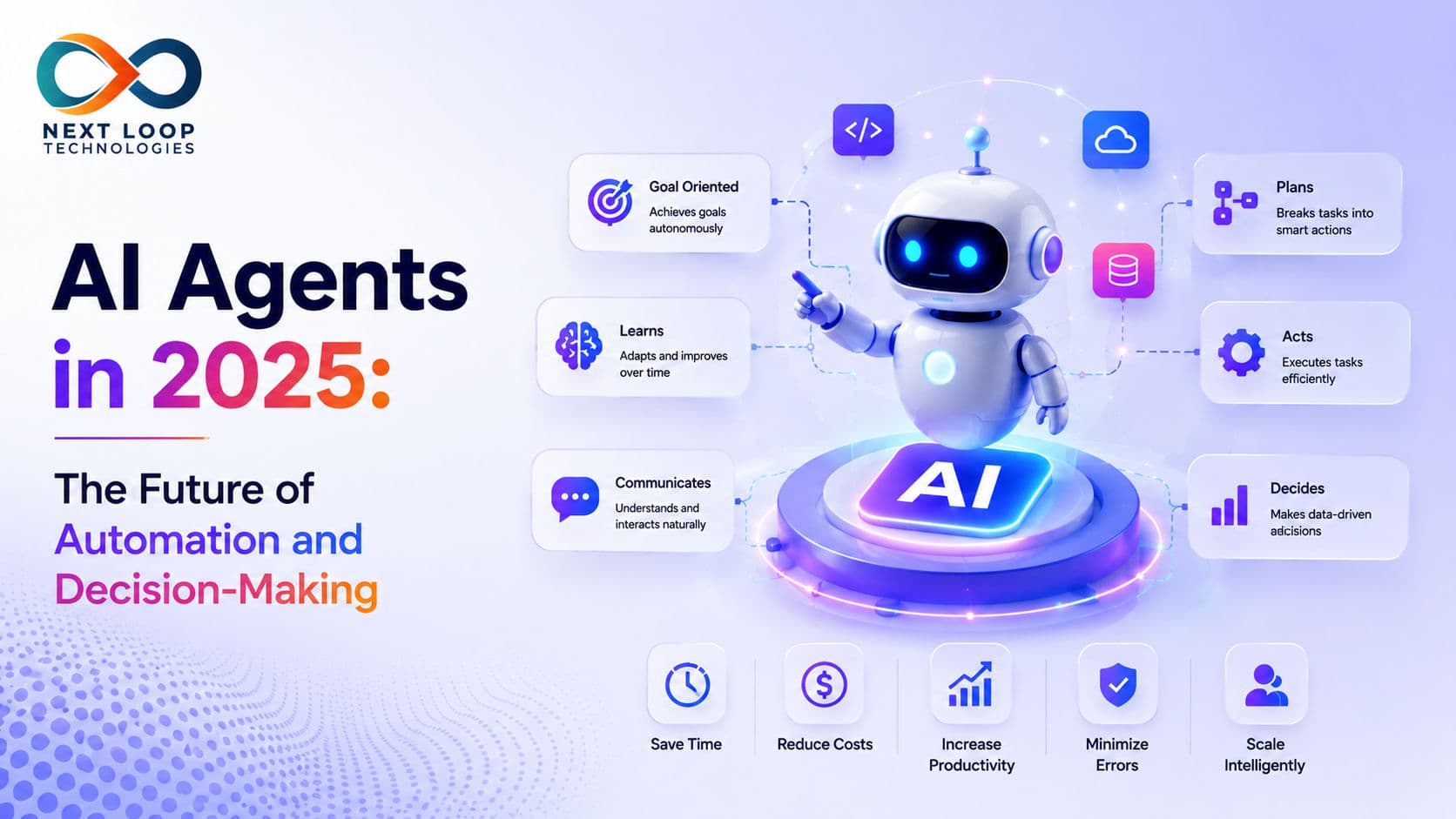
AI Agents: The Future of Automation and Decision-Making
Artificial intelligence is evolving beyond systems that simply respond to prompts. AI agents can pursue defined goals, use tools, process information, and perform multi-step tasks with varying levels of autonomy. These capabilities are creating new opportunities for businesses to automate workflows, improve customer experiences, and support decision-making.In this guide, we’ll explore what AI agents are, how they work, their benefits, their applications across industries, and the challenges businesses should consider when adopting them.What Are AI Agents?AI agents are software systems that perceive information, reason about tasks, and take actions to achieve specific goals. Depending on their design, they can interact with applications, retrieve information, use external tools, and adapt their actions based on feedback.Unlike conventional automation, which typically follows predefined rules, AI agents can handle some tasks that require contextual understanding and multi-step decision-making. However, their capabilities depend on the underlying models, tools, permissions, and level of human supervision.How Do AI Agents Work?AI agents generally follow a cycle of observing, reasoning, acting, and evaluating results.Receive an objective: The agent is given a task or goal to accomplish.Gather information: It collects relevant data from user inputs, databases, documents, or connected tools.Plan the next steps: It determines an appropriate sequence of actions based on the task and available information.Execute actions: It uses authorized tools or applications to carry out the planned steps.Evaluate the results: It checks the outcome and adjusts its approach when necessary, within its configured limits.Human approval may still be required for sensitive, high-impact, or irreversible actions.How AI Agents Are Transforming Key IndustriesAI agents have potential applications across industries where information processing, workflow coordination, and decision support are important.1. Customer ServiceAI agents can answer common questions, retrieve relevant information, assist with troubleshooting, and route complex requests to human support teams. With appropriate safeguards, they can help businesses provide more consistent support beyond standard working hours.2. HealthcareAI agents can support administrative workflows, organize medical information, and assist healthcare professionals with research and documentation. Clinical decisions must remain subject to appropriate professional oversight, privacy safeguards, and applicable regulations.3. FinanceFinancial institutions can use AI agents to assist with document processing, fraud investigation workflows, transaction monitoring, and financial data analysis. Decisions involving investments, lending, or financial risk require suitable validation and human oversight.4. ManufacturingAI agents can help monitor operational data, identify potential production issues, coordinate maintenance workflows, and support inventory planning. Their effectiveness depends on reliable data, system integration, and appropriate controls.5. Retail and E-commerceRetailers can use AI agents to assist with product discovery, customer inquiries, inventory analysis, order tracking, and personalized recommendations. Human intervention may be needed when requests involve refunds, disputes, or exceptions to business policies.What Are the Key Benefits of AI Agents?When implemented for suitable use cases, AI agents can offer several business benefits.Improved Operational EfficiencyAI agents can coordinate multi-step workflows and reduce the manual effort required for repetitive information-based tasks.Better Decision SupportBy gathering and analyzing relevant information, AI agents can help employees evaluate options and make more informed decisions. Their outputs should be verified when accuracy is critical.Personalized Customer ExperiencesAI agents can use relevant customer context to provide more tailored responses, recommendations, and assistance, subject to appropriate consent and data protection requirements.Greater ScalabilityWell-designed agent systems can support growing workloads by handling additional tasks, although computational costs, system capacity, and monitoring requirements must be considered.More Effective Human-AI CollaborationAI agents can take care of routine work while employees focus on complex problems, relationship-building, strategic planning, and decisions that require human judgment.What Are the Challenges of Using AI Agents?Despite their potential, AI agents introduce technical, operational, and ethical challenges that businesses should address before deployment.Job Displacement and Workforce ChangesAutomation may change certain job responsibilities and reduce demand for some repetitive tasks. Businesses can prepare by investing in employee training and identifying opportunities for human-AI collaboration.Bias and FairnessAI agents may reproduce biases present in their training data or operating environment. Testing across relevant scenarios and monitoring outcomes can help identify and reduce unfair results.Data Privacy and SecurityAgents that access company systems or customer information require appropriate permissions, secure integrations, and clear data-handling policies. Access should be limited to what each agent needs to perform its assigned tasks.Accountability and Human OversightOrganizations need clear ownership of agent actions, defined escalation procedures, and audit logs. Human review is especially important for decisions that affect people's rights, finances, safety, or access to essential services.Reliability and Unintended ActionsAI agents may misunderstand instructions, produce inaccurate information, or take inappropriate actions. Testing, restricted permissions, spending or action limits, and approval checkpoints can reduce these risks.How Can Businesses Get Started with AI Agents?A phased implementation can help organizations assess the value of AI agents while managing risk.Step 1: Identify a Suitable Use CaseLook for a repetitive or information-intensive workflow with clear objectives, measurable outcomes, and manageable risks.Step 2: Assess Data and System ReadinessDetermine whether the agent will have access to reliable data, compatible applications, and the tools required to complete its tasks.Step 3: Define Permissions and GuardrailsEstablish which actions the agent can perform independently, which require approval, and when it must escalate a task to a human.Step 4: Test in a Controlled EnvironmentEvaluate the agent using realistic scenarios, including unexpected inputs and failure cases. Measure accuracy, task completion, processing time, and operating costs.Step 5: Monitor and ImproveTrack performance after deployment, review errors, update workflows, and reassess security and compliance as the system evolves.How AI and Machine Learning Development Services Help Build AI AgentsDeveloping useful AI agents requires more than connecting a language model to a workflow. Businesses may need suitable machine learning models, reliable data pipelines, application integrations, secure tool access, and testing processes to ensure that an agent performs its intended tasks effectively.AI and machine learning development services can help businesses explore intelligent applications, predictive systems, and AI-powered workflows tailored to their operational requirements. The right development approach depends on the business problem, available data, required integrations, and the level of autonomy appropriate for the application.At Nextloop Technologies, businesses can explore AI and ML development services to learn more about applying artificial intelligence and machine learning to their digital transformation initiatives.Whether an organization is evaluating intelligent workflow automation, data-driven applications, or customized AI solutions, a structured development process can help align technical capabilities with business objectives. Responsible implementation should also account for privacy, security, reliability, and human oversight.What Does the Future Hold for AI Agents?AI agents are likely to become increasingly capable of coordinating tasks across software applications and supporting more complex business workflows. Advances in reasoning, tool use, and system integration may make them useful in a wider range of operational settings.However, greater autonomy does not automatically guarantee better results. Businesses will need to balance efficiency with reliability, security, transparency, and appropriate human control. Organizations that evaluate AI agents against clear business goals and introduce them gradually will be better positioned to understand their practical value.Conclusion: Are AI Agents the Future of Business Automation?AI agents represent an important development in automation and decision support. By combining information processing, tool use, and multi-step task execution, they can help organizations improve workflows, support employees, and deliver more responsive customer experiences.Successful adoption depends on choosing the right use cases, establishing safeguards, and continuously monitoring performance. With a responsible implementation strategy, businesses can explore how AI agents fit into their broader digital transformation plans.Want to explore how AI can support your business goals? Connect with Nextloop Technologies to discuss potential opportunities for intelligent automation and AI-driven solutions.
Read More...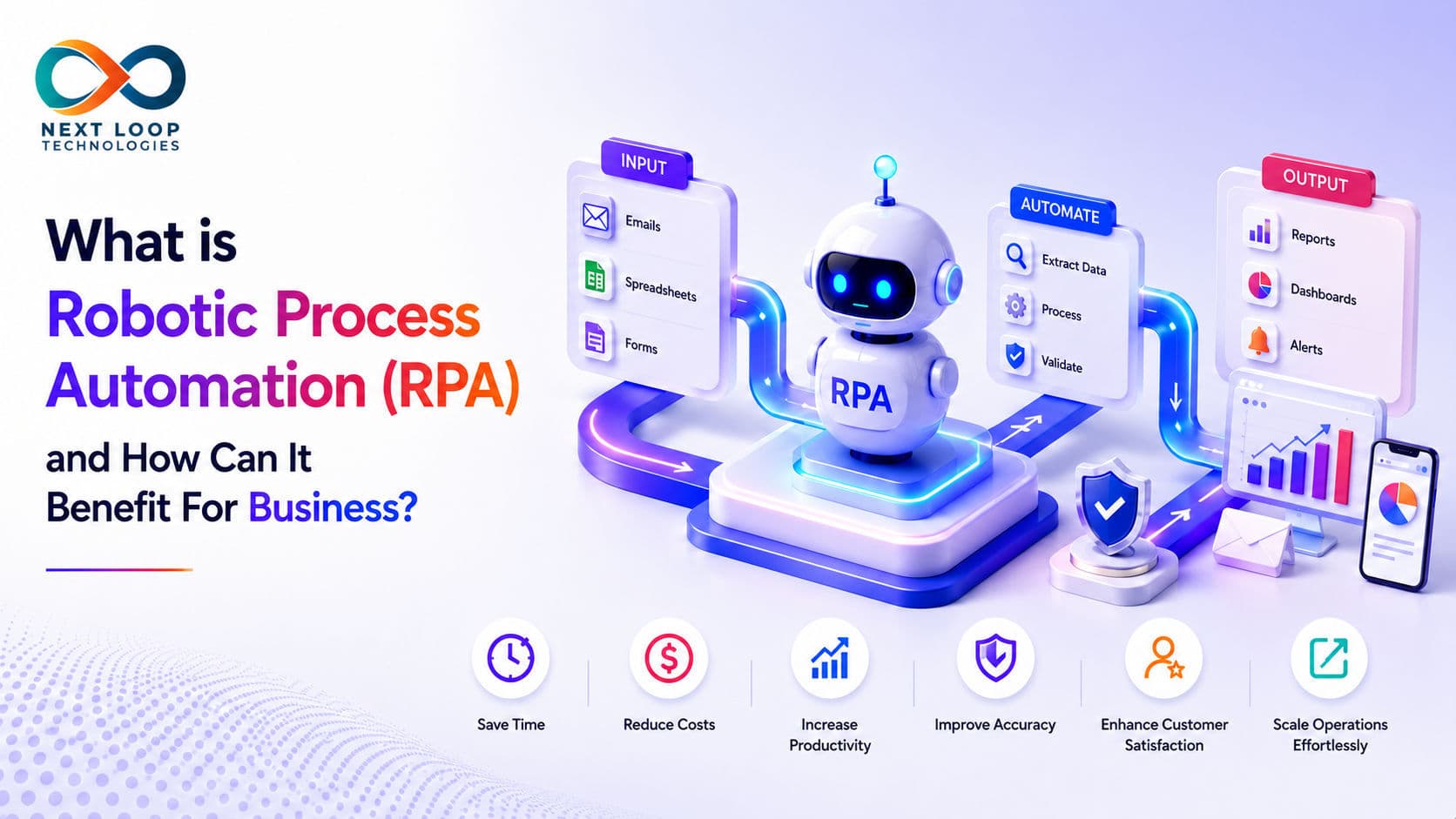
Robotic Process Automation (RPA): Benefits, How It Works, and Business Applications
Robotic Process Automation (RPA) is a technology that uses software robots, or “bots,” to automate repetitive, rule-based digital tasks such as data entry, report generation, and transaction processing. By automating routine workflows, businesses can improve efficiency, reduce operational costs, and minimize human errors.In this guide, we’ll explore what RPA is, how it works, its key business benefits, the industries using it, and how organizations can get started with automation.What Is Robotic Process Automation (RPA)?Robotic Process Automation (RPA) uses software bots to perform repetitive digital tasks by interacting with applications and systems in much the same way a human user would. These bots can enter data, transfer information between applications, generate reports, and process transactions according to predefined rules.Unlike traditional system integrations, RPA can often operate on top of existing software without requiring major changes to the underlying systems. This makes it a practical option for automating structured workflows across different business applications.Why Does RPA Matter for Your Business?RPA helps organizations streamline daily operations, improve productivity, and make better use of employee time. Its key benefits include:1. Boost Operational EfficiencySoftware bots can execute repetitive tasks quickly and consistently, helping businesses reduce processing times and handle larger workloads with less manual effort.2. Reduce Operational CostsAutomating routine processes can lower the time and resources required to complete administrative work, allowing teams to focus on higher-value activities.3. Improve Accuracy and ConsistencyRPA bots follow predefined rules, reducing errors associated with repetitive manual data entry and transaction processing. However, results still depend on the quality of the input data and the automation rules.4. Enhance Employee Productivity and SatisfactionWhen bots handle repetitive tasks, employees can spend more time on problem-solving, customer service, analysis, and other activities that require human judgment.5. Support Compliance and AuditabilityRPA can maintain process logs and consistent execution records, helping businesses monitor workflows and support compliance requirements. Appropriate access controls, monitoring, and data protection measures remain essential.How Does Robotic Process Automation Work?RPA implementation typically involves four main steps.Step 1: Identify Suitable TasksIdentify repetitive, rule-based processes with clear inputs, predictable outcomes, and measurable time or cost savings. Examples include invoice processing, data entry, and report generation.Step 2: Configure the Software BotUse an RPA platform to define the workflow, business rules, application interactions, and exception-handling procedures the bot must follow.Step 3: Deploy the BotConfigure the bot to execute the selected workflow in the appropriate environment, with access permissions and human approval steps where necessary.Step 4: Monitor and Optimize PerformanceMonitor execution logs, error rates, processing times, and business outcomes. Update workflows as applications, business rules, or operational requirements change.Which Industries Use RPA?RPA can support automation across industries where repetitive digital workflows are common.Banking and Financial ServicesBanks and financial institutions use RPA for customer onboarding, transaction reconciliation, loan application processing, and report preparation.HealthcareHealthcare organizations can use automation to support claims processing, patient data management, appointment administration, and billing workflows, subject to applicable privacy and security requirements.Retail and E-commerceRetail businesses can automate inventory updates, order processing, invoice management, and repetitive customer service workflows.IT and Business ServicesIT and business service teams can use RPA for routine data transfers, scheduled reporting, account administration, and other standardized operational tasks.How Can Your Business Get Started with RPA?A structured implementation approach helps businesses identify the right opportunities and reduce automation risks.1. Assess Your Existing WorkflowsReview daily operations to identify tasks that are repetitive, time-consuming, rules-based, and suitable for automation.2. Choose the Right RPA ToolEvaluate available platforms based on integration capabilities, security, scalability, licensing costs, and compatibility with your existing applications.3. Start with a Pilot ProjectAutomate one well-defined process first. Measure its impact on processing time, error rates, operating costs, and employee workload before expanding the initiative.4. Scale Automation GraduallyUse lessons from the pilot to refine workflows, establish governance, train employees, and expand automation to other suitable business processes.How AI and Machine Learning Can Enhance Business AutomationTraditional RPA works best with structured, predictable tasks that follow predefined rules. However, some business processes involve unstructured documents, changing patterns, language, or data that requires interpretation. This is where artificial intelligence and machine learning can complement automation.AI-powered systems can support document classification, information extraction, prediction, and intelligent decision-making, while RPA can execute the resulting actions across business applications. Combining these technologies can help businesses develop more flexible workflows, although the right approach depends on the process, data quality, and level of human oversight required.Businesses exploring intelligent automation can learn more about AI and ML development services from Nextloop Technologies. These services can help organizations explore AI-powered applications and machine learning solutions that align with their operational needs and digital transformation goals.Before implementing intelligent automation, businesses should also consider data privacy, system security, model reliability, and human review for sensitive or high-impact decisions.Conclusion: Is RPA Right for Your Business?Robotic Process Automation can help businesses increase efficiency, reduce repetitive manual work, improve consistency, and free employees to focus on more valuable activities. Its effectiveness depends on selecting suitable processes, configuring bots correctly, and continuously monitoring their performance.For organizations looking to go beyond rule-based automation, combining RPA with AI and machine learning may unlock additional opportunities to streamline complex workflows.Ready to explore automation opportunities for your business? Connect with Nextloop Technologies to discuss your digital transformation goals and identify potential solutions.
Read More...
AI Ethics: Understanding the Importance of Responsible AI
Artificial Intelligence (AI) is no longer a concept from science fiction—it’s a part of our daily lives. From voice assistants like Siri to self-driving cars, AI is revolutionizing how we work, live, and interact. However, as AI technology rapidly advances, it also raises important ethical questions. In this blog, we’ll explore what AI ethics are, why they matter, and how we can navigate the challenges they bring.What Is AI Ethics?AI ethics refers to the study of the moral implications and challenges that arise from the development and use of artificial intelligence. It addresses questions such as:How should AI systems behave?Who is responsible for decisions made by AI?How can we ensure AI benefits everyone fairly?AI is a tool created by humans, but when it operates autonomously (without human intervention), it can make decisions that affect lives, jobs, and entire industries. Understanding the ethical side of AI is crucial to make sure it’s used in ways that are beneficial and fair to society. How Can We Ensure AI is Used Ethically?There’s no easy solution to the ethical challenges of AI, but there are steps we can take to guide its development:Diverse and Inclusive Data: AI systems should be trained on diverse data sets to avoid biases and ensure fairness. This includes considering different races, genders, and socioeconomic backgrounds when gathering data.Transparency: Developers should make AI systems more transparent by explaining how decisions are made. This will help increase trust in AI and allow for accountability when things go wrong.Accountability and Responsibility: Companies and governments need to take responsibility for the outcomes of AI systems. When AI makes a decision, there should be a clear understanding of who is accountable.Privacy Protection: AI systems must be designed with privacy in mind. Data should be collected and used in a way that respects individuals’ rights and keeps personal information safe.Ongoing Monitoring: The ethical implications of AI should be continuously evaluated. As technology evolves, so too should our understanding of its social, economic, and moral consequences.How AI and Machine Learning Development Can Support Responsible InnovationBuilding ethical AI systems requires more than following guidelines—it requires the right technology, reliable data, and responsible development practices. Businesses looking to adopt AI should prioritize solutions that are designed with fairness, transparency, data privacy, and accountability in mind.AI and machine learning development can help organizations build intelligent applications that automate repetitive tasks, analyze complex data, improve decision-making, and deliver personalized user experiences. However, these solutions must be developed and tested carefully to minimize bias, protect sensitive information, and ensure that their outputs remain reliable.At Nextloop Technologies, businesses can explore AI and ML development services to discover how artificial intelligence and machine learning can support their digital transformation goals. By combining suitable AI models with responsible development practices, organizations can work toward building scalable, efficient, and trustworthy AI-powered solutions.Whether a business is exploring predictive analytics, intelligent automation, or customized AI applications, choosing the right development approach is essential to balancing innovation with ethical responsibility.The Future of AI EthicsAs AI continues to evolve, ethical considerations will play a bigger role in shaping its future. It’s important to have discussions about the ethical use of AI now so we can avoid unintended consequences down the line. By establishing ethical frameworks, investing in transparency, and encouraging collaboration between governments, businesses, and the public, we can guide AI technology in a way that maximizes its benefits while minimizing potential harms.Conclusion: The Need for Ethical AIThe ethics of AI are more important than ever, as these technologies are already affecting many aspects of our lives. We must approach AI development with care, ensuring that it’s used in ways that are fair, transparent, and accountable. By understanding and addressing the ethical issues of AI, we can make sure it continues to be a positive force for change in society.Want to learn more about how AI is shaping the future? Stay updated with the latest trends and ethical discussions by following Nextloop Technologies. Let’s explore the impact of AI together
Read More...